
Melbourne is Australia’s vibrant cultural capital, celebrated for its thriving arts scene, exceptional coffee culture, hidden laneways, and enthusiasm for major sporting events.
TL;DR
Melbourne consistently tops liveability rankings, and for visitors that means something specific: good food and coffee on every corner, public transport that works, and a city that spreads its best bits across neighbourhoods rather than concentrating them into one postcard-ready precinct. You won’t find Melbourne’s identity in one landmark. It’s in a Saturday morning market, a laneway you stumbled into by accident, a bar that has no sign on the door.
That’s why knowing where to head matters more here than in most cities. Go in without a rough plan and you’ll spend your time circling the CBD while the real action is a tram ride away.
This guide covers what to see in Melbourne: the city icons worth ticking off, the laneways and neighbourhoods worth wandering, and the day trips that round out a visit.
The Melbourne Icons
These are the anchors. Most visitors hit a handful of them. Here’s what to know before you go.
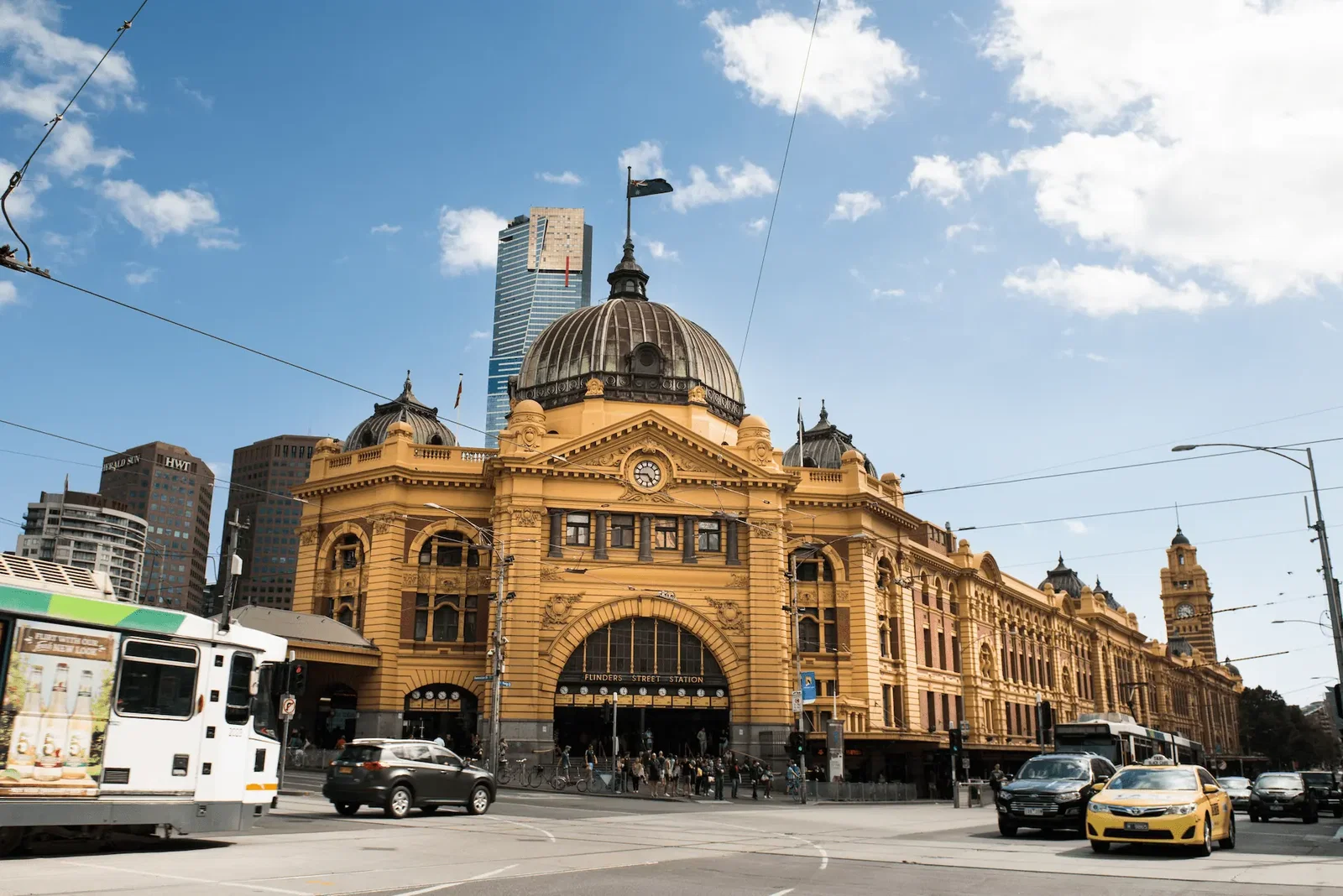
Federation Square and Flinders Street Station. Federation Square sits at the intersection of Flinders and Swanston Streets, directly opposite Flinders Street Station, the yellow-domed building that appears in roughly every photograph taken of Melbourne. The square is free to walk through, houses ACMI and NGV Australia, and serves as a central meeting point. The station itself is still an operational rail hub; the best shot of the facade is from the steps at dusk.
Eureka Skydeck. The 88th floor of the Eureka Tower puts you 285 metres above the city. The standout is the Edge, a glass cube that extends out from the building so you’re effectively standing in the air above the street. Book ahead for golden hour, when the Yarra River and Port Phillip Bay catch the light.
Melbourne Cricket Ground (MCG) and Australian Sports Museum. The MCG holds around 100,000 people and remains one of the great sporting venues anywhere. Guided tours take you onto the playing surface, into the members’ reserve, and through the Australian Sports Museum attached to the ground. Worth doing even if you have no interest in cricket.
National Gallery of Victoria (NGV). Two sites: NGV International on St Kilda Road (the one with the water wall) and NGV Australia at Federation Square. General entry to both is free; major ticketed exhibitions run throughout the year. If a big exhibition is on, book ahead.
Royal Botanic Gardens. 36 hectares of gardens on the south side of the Yarra, with views back towards the city skyline. The Aboriginal Heritage Walk, run by Koorie Heritage Trust, is a guided tour that covers the garden’s history from a First Nations perspective. One of the better ways to spend a morning in Melbourne.
Royal Exhibition Building and Carlton Gardens. Listed as a UNESCO World Heritage Site, the Royal Exhibition Building is frequently missed by visitors focused on Fitzroy or Carlton’s restaurant strip. Built for the 1880 Melbourne International Exhibition, it’s one of the oldest surviving exhibition pavilions in the world. The gardens are good for a wander; the building runs regular tours.
Laneways, Street Art, and Neighbourhoods
Melbourne’s laneways and inner suburbs are where half your visit will disappear. That’s not a bad outcome.
The Laneways
Hosier Lane is the most photographed: floor-to-ceiling street art that changes regularly, just behind Federation Square. AC/DC Lane runs parallel to Flinders Lane and has its own distinct character. Centre Place, between Flinders Lane and Collins Street, is a narrow passage packed with cafe tables and is quietest before 9am on weekdays.
Degraves Street, running between Flinders Street and Flinders Lane, is Melbourne’s cafe laneway. Outdoor tables, espresso bars, coffee taken seriously. Worth stopping even if you’re just passing through.
Fitzroy and Brunswick
Fitzroy sits around 2km north of the CBD. Brunswick Street runs through it with bookshops, bars, vintage stores, and restaurants. Brunswick the suburb pushes further north with a similar feel and less tourist traffic. Good for an afternoon of wandering; worth staying for dinner.
Carlton: Lygon Street
Lygon Street has been Melbourne’s Italian strip for decades. Gelato, pasta, pizza, outdoor dining that stretches down both sides of the street. More tourist-facing than it once was, but still worth a visit.
St Kilda
About 6km from the CBD. Acland Street has the cake shops and has kept its slightly eccentric character. Luna Park at the northern end of the beach strip has been running since 1912. The pier at dusk is the place to watch little penguins come ashore; they nest under the pier and return each evening year-round.
Markets
Queen Victoria Market (QVM) is the historic option: 7 hectares of covered stalls in the CBD fringe, running since 1878. South Melbourne Market has a better reputation among locals for produce. Pick one. QVM for the scale and atmosphere; South Melbourne for a more manageable morning.
Day Trips Worth Taking
Most Melbourne visitors make at least one trip out of the city. Here are the main options and what to know.
Great Ocean Road and the Twelve Apostles
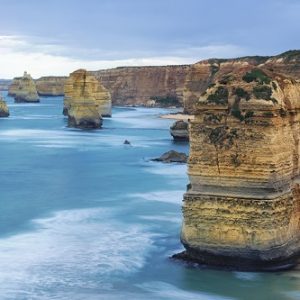
A full-day commitment from Melbourne, around 3.5 hours each way to the Apostles themselves. The road is as much the attraction as the destination, particularly the stretch through Lorne and Apollo Bay. Sunrise or sunset at the Twelve Apostles rewards the early start or the timing. Self-drive is doable; a guided tour handles the navigation and lets you cover more ground.
Phillip Island
Around 90 minutes from the CBD. The main draw is the Penguin Parade at dusk (year-round), where little penguins come ashore after a day at sea. Koalas are at the Koala Conservation Reserve; the Nobbies boardwalk has views of Seal Rocks. Works as a self-drive or on a tour.
Yarra Valley
45 minutes from the CBD. Around 80 wineries and cellar doors, plus Healesville Sanctuary if you want Australian wildlife. Works well as a half-day or full day. Best in autumn when the vines turn.
Mornington Peninsula
An hour south of the city. Peninsula Hot Springs, ocean beaches, vineyards, and some of Victoria’s better farm-to-table restaurants. Self-drive is fine; book the hot springs ahead.
Dandenong Ranges.
About an hour east of Melbourne. Puffing Billy (a heritage steam train through Sherbrooke Forest) is the headline for families. Good forest walks and small townships throughout. A manageable half-day from the city.
Free and Family-Friendly Picks
Free Things to See in Melbourne
- NGV International (St Kilda Road) and NGV Australia (Federation Square): free general entry
- State Library of Victoria: free, and the La Trobe Reading Room alone makes the visit
- Royal Botanic Gardens: free general entry
- City Circle Tram: free heritage tram loop around the CBD perimeter
- ACMI (Australian Centre for the Moving Image): free general exhibitions at Federation Square
- Laneway street art: Hosier Lane, AC/DC Lane, and dozens of spots across Fitzroy, Collingwood, and the CBD
Family-Friendly Melbourne Attractions
- Melbourne Zoo (Parkville): 30 minutes from the CBD, one of the older zoos in the world
- SEA LIFE Melbourne Aquarium: CBD, on the Yarra riverbank
- Scienceworks (Spotswood): hands-on science museum with a planetarium
- Luna Park (St Kilda): rides, heritage atmosphere, beachside location
- Melbourne Museum (Carlton Gardens): children’s gallery and IMAX theatre
Planning Your Melbourne Visit
Melbourne doesn’t hand itself over in a single afternoon. The best visits treat it as a city to wander rather than a checklist to work through. An afternoon in Fitzroy covers more ground than ticking off the standard tourist loop. Get out to the inner suburbs, take one day trip, leave some time to sit somewhere with a coffee and no specific plan.
If you want to cover the highlights without sorting the logistics yourself, Melbourne Must Do Package brings together the main city stops alongside Phillip Island and the Great Ocean Road.
Frequently Asked Questions
What is Melbourne most famous for?
Melbourne has a reputation for coffee, street art, sport, and food. It hosts the Australian Open and the Australian Formula 1 Grand Prix. Its character sits in its neighbourhoods more than any single landmark.
How many days do you need to see Melbourne?
Three days covers the main city attractions and one day trip. Five to seven days lets you explore the inner suburbs properly and get out of the city two or three times. Most visitors find three days is the minimum before they feel like they’ve actually been.
What are the top free things to see in Melbourne?
The NGV (both sites), the State Library of Victoria, Royal Botanic Gardens, the City Circle Tram, ACMI exhibitions, and the laneway street art are all free. A full day of Melbourne sightseeing costs nothing if you plan it right.
What’s the best day trip from Melbourne?
It depends on the time and your interests. The Great Ocean Road is the most scenic. Phillip Island is easier to plan around the Penguin Parade timing. Yarra Valley suits a relaxed half-day. All three are within 90 minutes to 3.5 hours of the city.
Is Melbourne or Sydney better for sightseeing?
Different cities. Sydney has a more concentrated set of iconic landmarks: the Harbour, the Opera House, the Bridge. Melbourne rewards those who explore beyond the obvious and has more depth in food, arts, and neighbourhood culture. Neither is objectively better; they suit different kinds of visitors.
What’s the best way to get around Melbourne for sightseeing?
Melbourne’s tram network covers the CBD and inner suburbs well. Trams are free within the Free Tram Zone (roughly the CBD perimeter). A Myki card covers trams, trains, and buses outside the free zone. For day trips, a hire car or guided tour is the practical option.
When is the best time of year to visit Melbourne?
March to May (autumn) and September to November (spring) are the most consistent for weather. Summer (December to February) is hot and unpredictable; Melbourne is known for four seasons in one day. Winter is mild by Australian standards and attracts fewer crowds.
What are the must-see Melbourne laneways?
Hosier Lane for street art, Degraves Street for cafes, Centre Place, and AC/DC Lane. Caledonian Lane and Rutledge Lane in the CBD are less trafficked alternatives worth finding.
Explore the Popular Australian Tours