
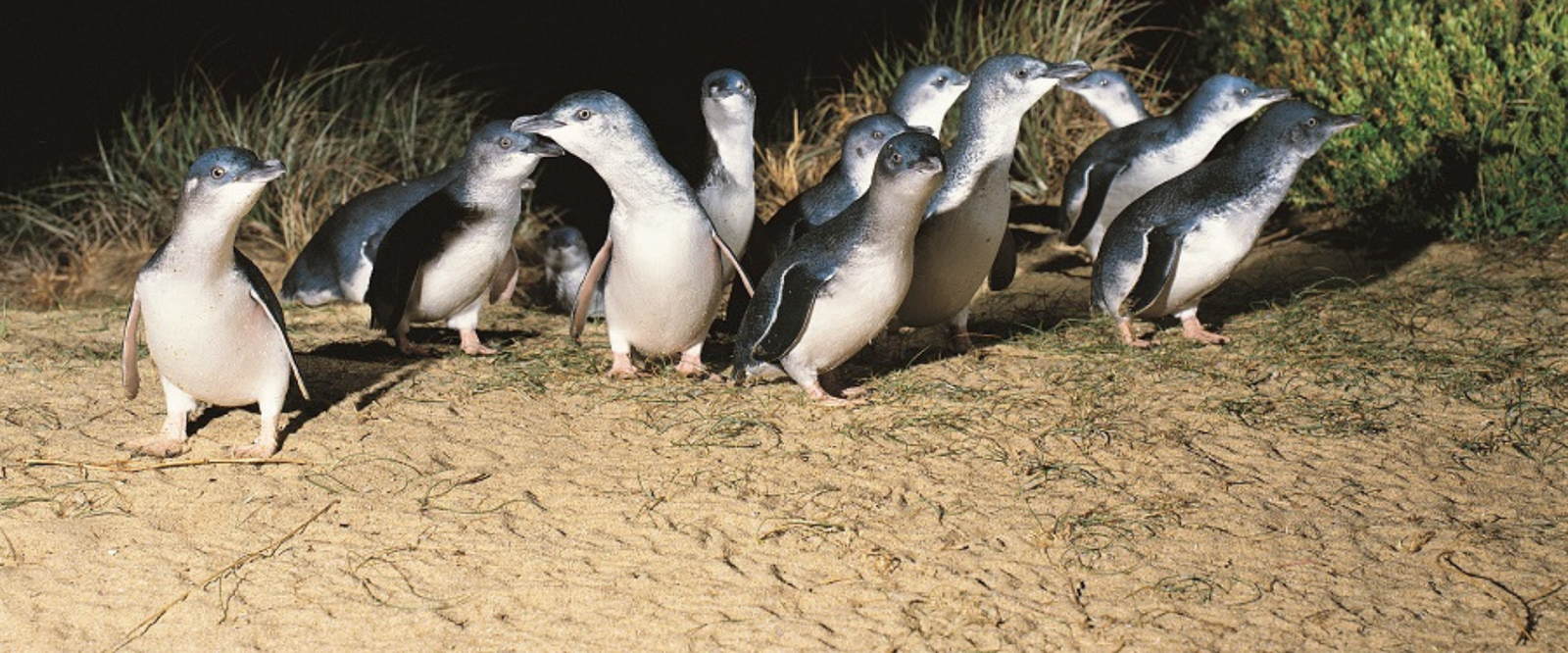
The smallest species of penguin in the world is the little fairy penguin, and they live on the south coast of Australia! There are two spots you can see the little fairy penguins from Melbourne. Either head down to St Kilda at sunset, or take a day trip to Phillip Island and watch the Penguin Parade at Summerland Beach.
The Little Penguins of Phillip Island
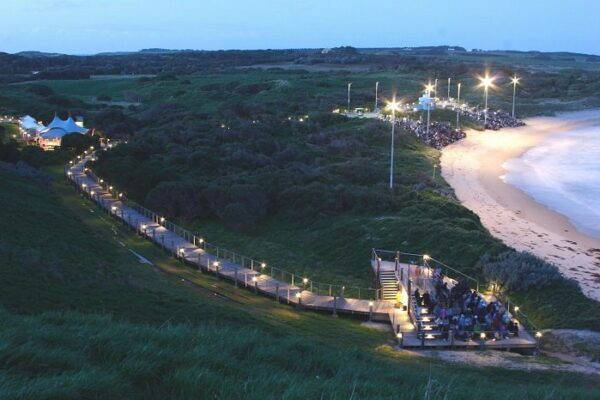
Before the colonisation of Phillip Island, there were about 10 fairy penguin colonies on the island. Like clockwork, the groups of little penguins return from the ocean every single evening at dusk.
When they return to the beach, they will have been in the ocean for a few months at a time. They’re returning to land after a long stint out in the sea, so returning from the ocean is a big moment for them!
Every evening on Summerland Beach, there are around 2000 little penguins that return from the ocean. They peep out from the waves and waddle across the shore in the safety of the darkness to protect them from sea eagles.
Throughout their whole existence, the little penguins have faced many different threats. From colonisation and building roads/infrastructure, to foxes, these little penguins have faced a decline in population numbers!
Luckily, Phillip Island Nature Parks works hard to retain penguin colonies through several different ways:
- Introducing more native plants so that the penguins rely on the plants for a comfortable life
- Creating wooden penguin boxes and introducing them to the colony
- Introducing programmes to get rid of foxes
That means we’re lucky enough to still be able to see the little penguins every night, as they return to land.
Why did the big colonies disappear?
Many of the colonies disappeared because of road construction, foxes, and many other factors.
The Phillip Island Nature Parks work hard to retain penguin colonies through:
- Introducing more native plants that the penguins rely on for a comfortable life
- Creating wooden penguin boxes and introducing them to the colony
- Introducing fox eradication programmes
Penguins on Phillip Island: Pros & Cons
Pros:
- More chance of seeing penguins: Seeing the penguins on Phillip Island means you’re far more likely to see more penguins. Every night, there are around 2000 little penguins that waddle along the beach.
- Better view: The beach is flatter, and so your view will not be quite as restricted as St Kilda.
- More chance of securing a place: Compared to the small 150 spots at the St Kilda penguins, the Penguin Parade holds up to 3800 people every evening! That means you’re more likely to book a spot for a last-minute chance to see the penguins on Phillip Island most days of the week.
Cons:
- Further away: The Penguin Parade is further away from Melbourne than St Kilda pier…but this makes the viewing experience a great opportunity to take a day trip from Melbourne!
- Tickets are not free: Whereas the St Kilda penguins is a free event, you have to pay fora ticket to see the penguins at the Penguin Parade.
Seeing the little penguins in St Kilda: Pros & cons
Pros:
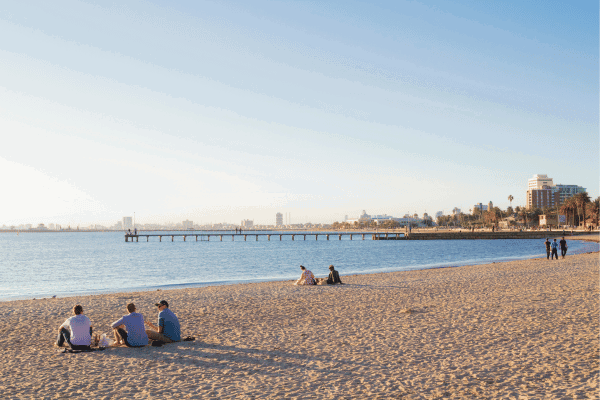
- Easy to get there: St Kilda is easy to get to from the Melbourne CBD! Simply hop on the tram, and you’ll arrive near the pier in just 20 minutes. It’s an easy walk down to the pier, where you’ll easily be able to see the little penguins as they come into their burrows.
- Tickets are cheaper: While it’s not guaranteed that you’ll see heaps of penguins, seeing the penguins at St Kilda is free. Having said that, it’s a good idea to book in advance because there are only 150 spots per evening! It’s not every day that you can see penguins 20 minutes from the Melbourne CBD, so the viewing is usually quite popular.
Cons:
- Restricted view: The view might be restricted, as many of the penguins come to the pier too. It’s a rocky cliff edge with a little gap between the ocean and the penguins’ burrows! In comparison to Summerland Beach on Phillip Island, which is a flatter beach offering a wider view of the penguins.
- Fewer penguins: You may not see as many penguins in St Kilda as you would on Phillip Island – it’s not guaranteed that you’ll see many here!
Explore the Popular Australian Tours