

Australia’s Red Centre is the world’s prime spot to get breath-taking views of the stars in the Southern Hemisphere.
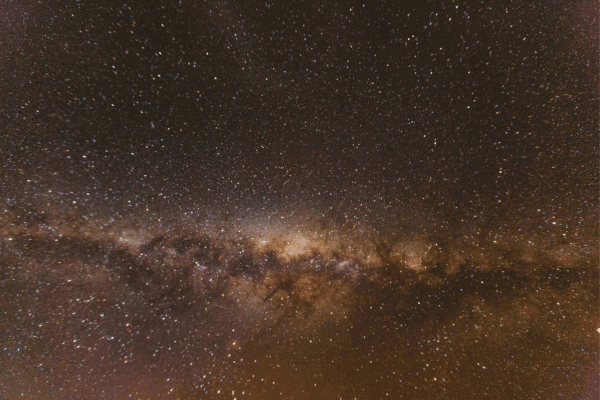
Australia’s night skies boast some of the best star constellations in the Southern Hemisphere.
The Northern Hemisphere’s night skies are a pretty celestial sight. The night sky in Australia is famously unlike anything else in the world. But the Southern Hemisphere skies? That’s stargazing on another level.
Australia’s uniqueness doesn’t stop at night.
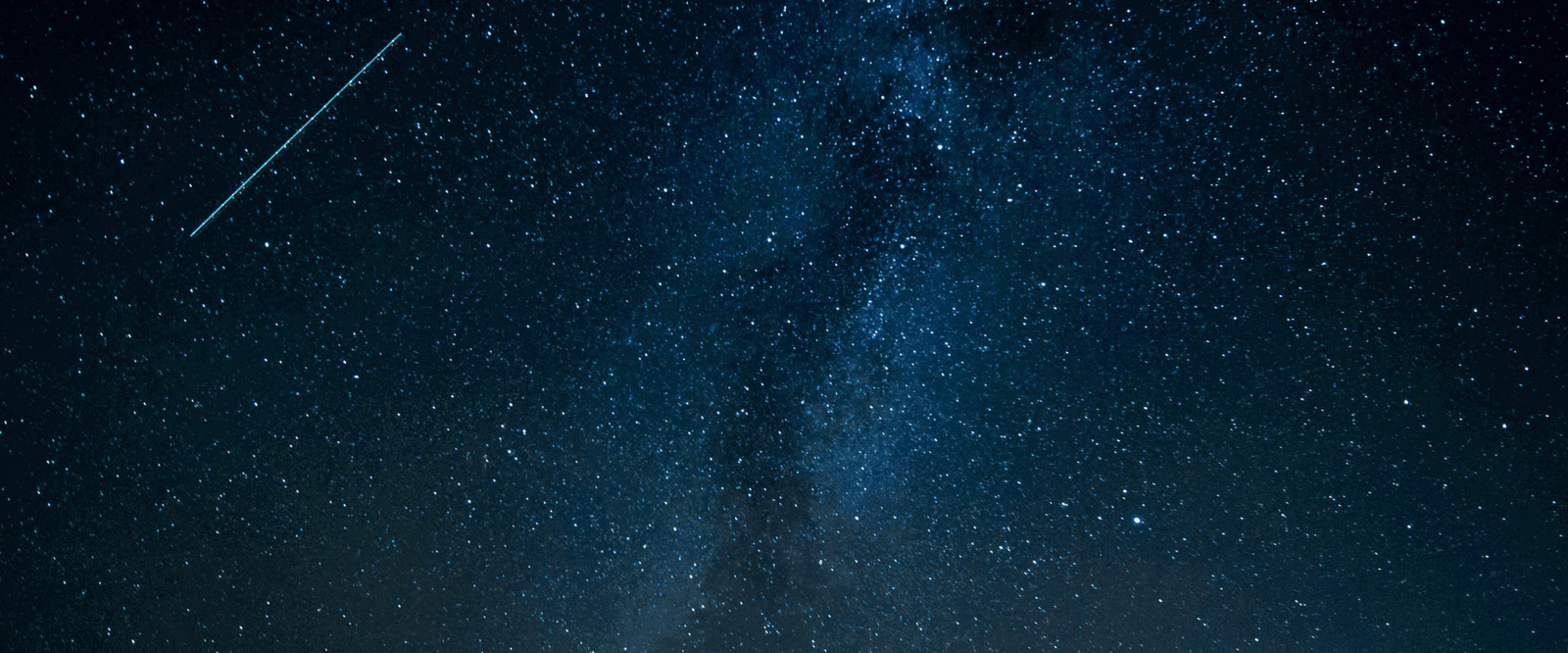
Some say the Indigenous people of Australia were the world’s first astrologers – and it’s easy to see how. Look up into the night sky in Australia’s Red Centre, and you’ll see a screen of stars that look electric. On a clear night, the atmosphere is cloaked in inky black darkness, scattered with beautiful glittery stars which all differ in size and twinkle-factor.
But why is the night sky in the Red Centre so much clearer than everywhere else in the Southern Hemisphere?
Why are the night skies in Australia so much clearer?
-
The air is dry and clear
-
The remoteness and vastness of the land mean zero light pollution
-
Australia is closer to the Milky Way, so stars appear larger and clearer
Lack of humidity and drier air = clearer skies
Australia is the second driest continent in the world. There are so many different types of atmospheric conditions in Australia, due to the sheer size of its land mass.
The Red Centre has a semi-arid desert climate, which means each season is drastically different in comparison to the season before it. The lack of humidity in the Red Centre means the air is drier. This clearer air quality means the starry night sky is more visible because there is less moisture in the air.
There’s quite a big difference between temperatures during the day and night. The daytime might cause a sweaty heat, but this can soon disappear into thin air when the sun sets. The daytime heat is lost at night, and the clear night sky allows the stars to shine through.
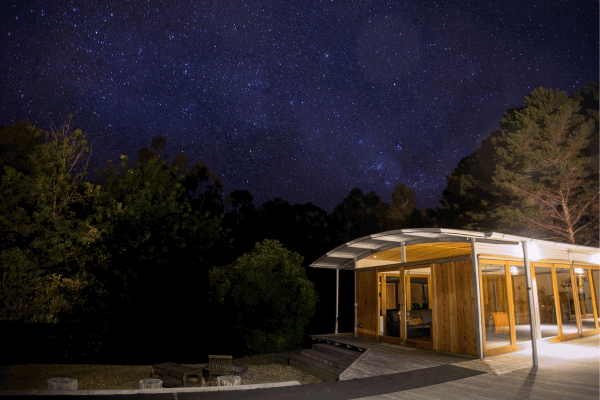
Remote Land
The remoteness of Australia’s land mass means limited light pollution, so your view of the stars is not distorted by any light from the civilisation below.
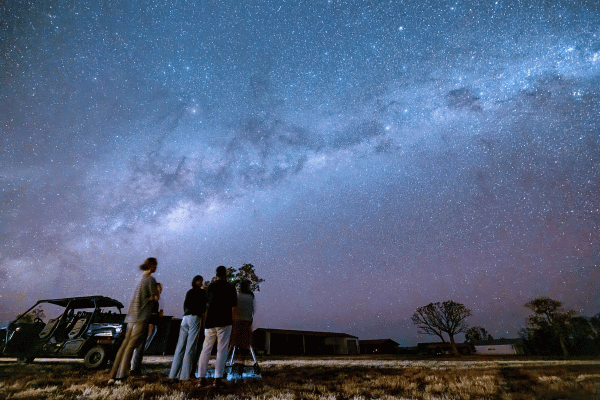
Populated areas emit lots of chemical and light pollution. Towns and cities emit light and chemical pollution, which distorts our view of the stars. These pollutants can thicken the atmosphere and create clouds that fog in front of the stars.
Inland Australia is largely empty, punctuated only by a small scattering of towns here and there. The vast amount of unpopulated land means there is very little light and chemical pollution. This means the skies are beautifully clear – particularly in the South Australia desert, and most parts of Northern Territory. Look up at 3 am on a clear night in Alice Springs, and you’ll get a completely uninterrupted view of the night sky.
Closer to the Milky Way
Australia is closer to the Milky Way than other countries in the Southern Hemisphere, so the stars here appear bigger and brighter.
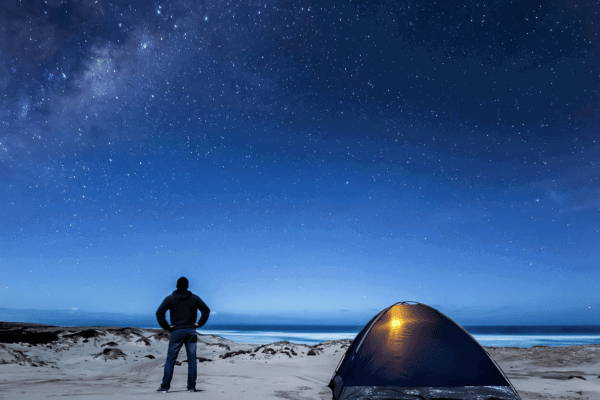
The land mass is a lot closer to the Milky Way. This closer proximity means the stars appear larger and brighter, and the pattern of the Milky Way is a lot more visible.
In fact, you don’t actually have to be in the Red Centre to see the Milky Way. The Milky Way is visible from lots of remote and rural towns outside of the major cities. Regional Australia is the perfect spot to stargaze, and you can see it any time of year.
The Best Places for Stargazing in Australia
There are some great spots everywhere for stargazing in Australia. You only need to travel a couple of hours outside of Australia’s major cities to be able to get to a stargazing spot. But of course, the closer you get to the Red Centre, the clearer the views.
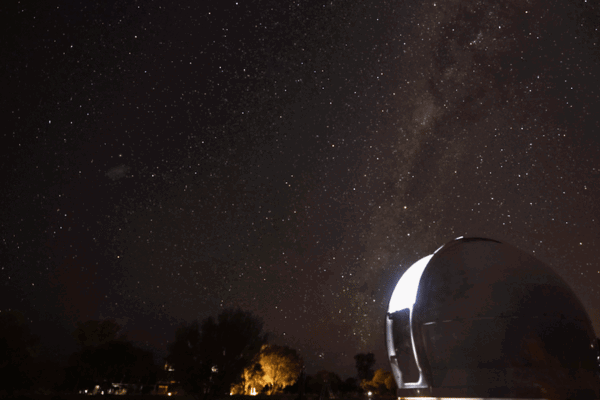
The best way to see the stars in the Red Centre is to go on a tour through the outback that includes an overnight stay. Whether you’re swag camping on a 4-day tour from Alice Springs to Uluru, or you’re glamping in a bell tent in the Flinders Ranges, check out some of the Red Centre tours that will allow you some incredible views of the Red Centre’s night sky.
And if you want to take your stargazing adventure to the next level, check out an astronomy tour. The Earth Sanctuary in Alice Springs offers an AstroTour – where you can eat dinner under the stars, or get a 15-hour immersive night sky experience from dusk until dawn.
Stars you can only see in Australia
Due to the position of Australia in the Southern Hemisphere, some constellations can only be spotted in Australia.
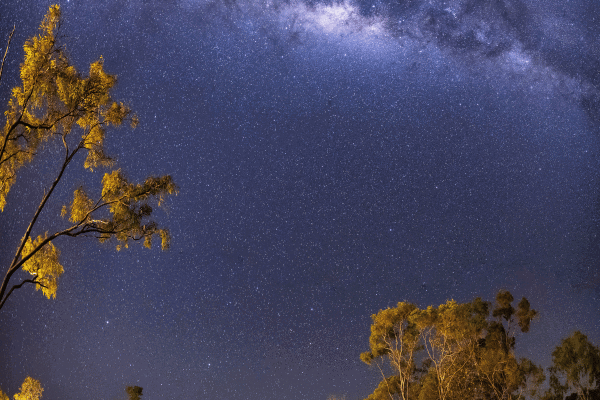
Some constellations in the Southern Hemisphere can only be spotted in Australia!
Some of the most well-known constallations are…
- The bright centre of the Milky Way and the Magallanic Clouds (which act as satellite galaxies to the Southern Hemisphere galaxy we’re in)
- The Southern Cross (Sometimes called the ‘Crux’, the Southern Cross is the easiest constellation to spot)
- The Southern Pointers (the two stars that hang off the side of the Southern Cross)
Explore the Popular Australian Tours