
Perth is Australia’s sun-soaked western capital, where pristine beaches, a laid-back outdoor lifestyle, and a vibrant cosmopolitan center meet along the Swan River.
TL;DR
Perth is the most isolated capital city in the world. It’s closer to Bali than it is to Sydney, which shapes everything from how you get there to how the city thinks about itself. Visitors who arrive expecting a smaller version of Sydney or Melbourne usually leave surprised: it’s quieter, more spread out, and sits on one of the genuinely beautiful stretches of Australian coastline.
What you see in Perth depends on how much time you have. The city itself is easy to cover in two to three days. Western Australia extends well beyond the city limits, and the further you go, the more compelling it gets.
This guide covers Perth city essentials, day trips from the CBD, the destinations further afield that earn WA its reputation, and how to plan the whole thing.
Perth City: The Essentials
The core Perth attractions are easy to get around. Here’s what to know about each one.
Kings Park and Botanic Garden
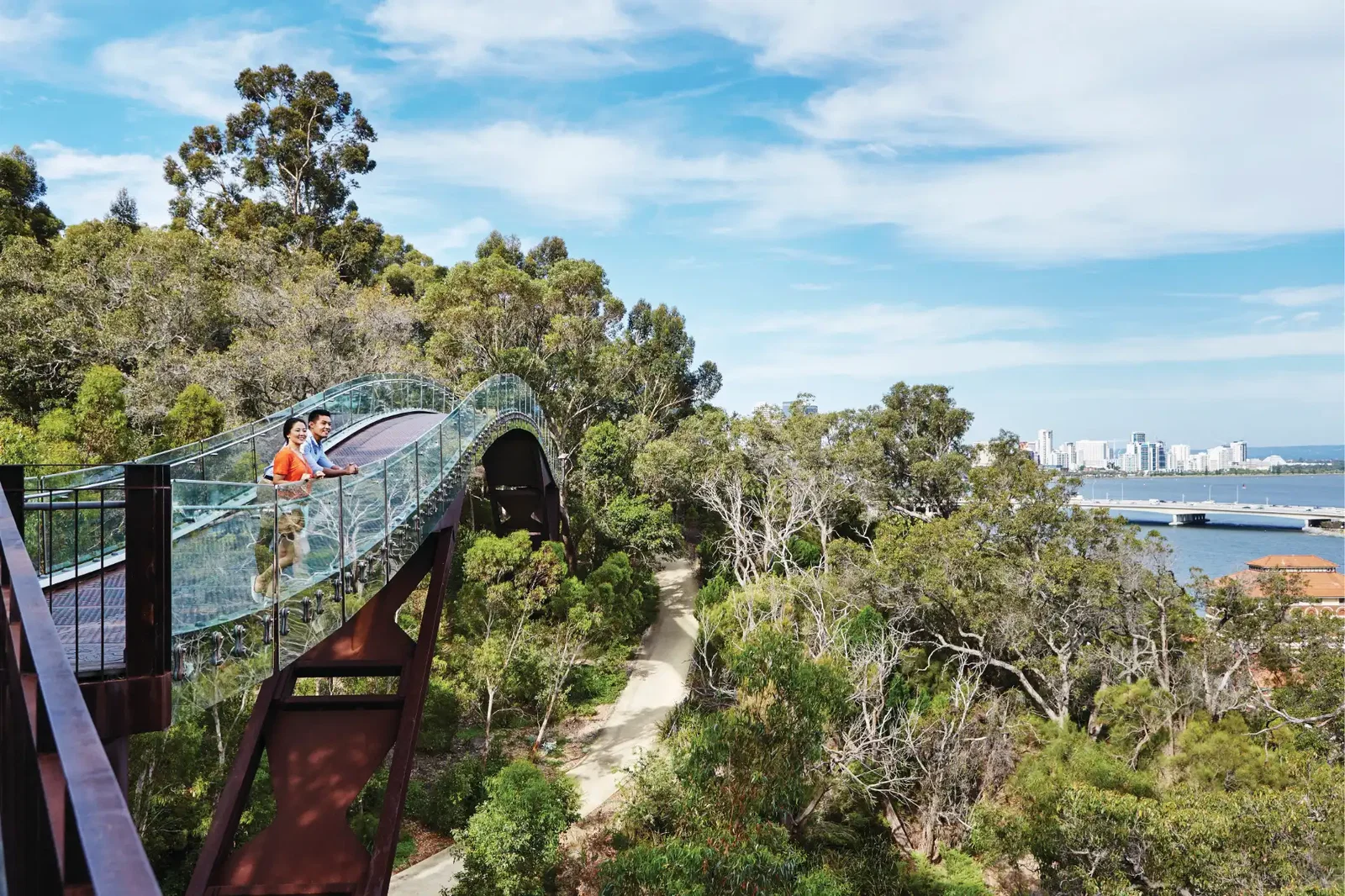
Kings Park sits above the city on the edge of the CBD, covering 400 hectares, around 60% of which is natural bushland. The views over the Swan River and the city skyline are the best free viewpoint in Perth. Open year-round, free entry. Worth visiting around sunrise or sunset when the light is good.
Swan River Foreshore and Elizabeth Quay
Elizabeth Quay is Perth’s redeveloped waterfront, built around a man-made inlet on the Swan River. You can walk the foreshore, take a ferry across to South Perth for views back to the city, or continue east toward the Swan Bell Tower. The river is wide and clean and makes the city feel more spacious than its population would suggest.
Cottesloe Beach
About 25 minutes from the city centre. The Indian Ocean stretches to the horizon, and the sunsets over open water are worth timing a visit around. The beach strip is walkable, with cafes and restaurants along the foreshore. Cottesloe is the go-to Perth beach for good reason.
Fremantle
Treat Fremantle as part of a Perth visit rather than a side trip. Around 30 minutes from the CBD by train. The Fremantle Markets have been running since 1897, open Friday to Sunday. Fremantle Prison runs daily tours, including an underground tunnel tour and a torchlight option at night. The cappuccino strip along South Terrace has been doing outdoor dining longer than most of Perth’s other neighbourhoods.
Perth CBD Highlights
Yagan Square is the central public space, good for orientation. The Bell Tower on the foreshore near Elizabeth Quay houses the historic Swan Bells, originally from St Martin-in-the-Fields in London. Perth Cultural Centre, a short walk north of the CBD, brings together the WA Museum Boola Bardip (modern, well-designed, free for the permanent collection) and the Art Gallery of Western Australia.
Day Trips from Perth
If you have extra days, these are the trips worth making from the city.
Rottnest Island
Around 90 minutes by ferry from Perth or Fremantle. Rottnest is best known for quokkas, small marsupials endemic to the island that are unusually unbothered by people. No private cars on the island; bikes are the main way to get around. Swimming and snorkelling around the bays is excellent, with clear water across most of the island’s 63 beaches. Book ferries and bike hire ahead in summer.
Pinnacles Desert (Nambung National Park)
About 2.5 hours north of Perth. Thousands of limestone pillars rise from yellow sand, best in early morning or late afternoon when the shadows lengthen. Drive in independently or take a guided tour from Perth. Most organised tours combine the Pinnacles with Lancelin Sand Dunes in a full-day loop.
Swan Valley
Less than 30 minutes from the CBD, which makes it the easiest half-day option out of Perth. Wine, craft beer, chocolate, and cheese. Good for a morning or afternoon when you want to be out of the city without committing to a long drive.
Margaret River and the South West. About 3 hours south of Perth. Margaret River is one of Australia’s better-known wine regions, with caves, surf beaches, and Karri forests adding to the draw. A single long day is doable but rushed; two to three days gives you time to cover the wineries, a beach, and at least one of the limestone caves properly. Whale watching off Augusta runs from June to September.
Penguin Island and Mandurah
About an hour south of Perth. Penguin Island is a short ferry hop from Rockingham, home to a colony of little penguins. The Mandurah estuary has dolphins; boat tours run most of the year. A straightforward half-day or full-day drive south.
Going Further: Western Australia Beyond the South West
These are not day trips. They require a flight or a multi-day drive. But they’re the reason WA gets onto serious travellers’ short lists, and they earn the Western Australia half of this guide’s title.
Ningaloo Reef and Exmouth
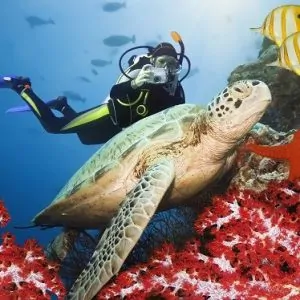
Ningaloo is one of the few reef systems in the world accessible directly from shore. Whale sharks are present from March to August, the largest confirmed aggregation of their kind anywhere. Manta rays, humpback whales, and dugongs are also regulars. Fly into Exmouth from Perth (around 2.5 hours). Book whale shark tours early; they fill quickly.
Karijini National Park
In the Pilbara region, around 1,400km north of Perth. Karijini has deep gorges and spring-fed swimming holes, some accessible on foot, others requiring guided tours for the more technical entry routes. The Hancock Gorge and Handrail Pool walk is the classic. Best April to September; summer heat makes most of it impractical.
Broome and the Kimberley
Broome sits at the top of Western Australia, around 2,200km from Perth (fly, don’t drive). Cable Beach is 22km of red pindan cliffs meeting clear water; sunsets from the beach are worth the trip on their own. The Kimberley north of Broome includes Horizontal Falls, the Bungle Bungles, and Mitchell Falls. Dry season only (May to October); the wet season makes much of it inaccessible.
Kalbarri
Around 590km north of Perth, roughly 6 hours by road. Kalbarri National Park has coastal cliffs and Murchison River gorges. The Skywalk, completed in 2020, extends out over the gorge on two platforms. Wildflower season (August to October) adds to the drive north.
When to Visit and How to Plan
Best Time of Year
For Perth and the South West: September to November and March to May are the most reliable. Summer (December to February) is hot; the beach towns and Rottnest fill up. For northern WA, the dry season (May to October) is the only practical window. The wet season makes northern roads impassable and some areas genuinely dangerous.
How Long to Allow
| Time Available | What to Cover |
| 3 days | Perth city + Fremantle + Cottesloe Beach |
| 5 days | Add Rottnest Island and Swan Valley or the Pinnacles |
| 7+ days | Add Margaret River or a South West road trip |
| 10-14 days | Add Ningaloo, Broome, or Karijini (fly into each) |
Getting Around
Perth’s train network covers Fremantle and the main suburbs reliably. For anything further out, a hire car or a guided tour is the practical choice. For northern WA, fly. The distances make road-tripping a serious time commitment that most visitors underestimate.
Planning Your WA Trip
Perth is the kind of city that doesn’t sell itself hard. The beaches, parks, and river do most of the work. Beyond the city, Western Australia has more variety than most travellers expect: wine country three hours south, a reef system you can reach by snorkel, and one of the most remote wilderness regions on the planet.
Start in Perth. Add Fremantle and at least one beach. Then decide how far you want to go.
For guided options covering the city highlights and the best day trips from Perth, see Perth Tours.
Frequently Asked Questions
What is Perth best known for?
Perth is known for its beaches (Cottesloe in particular), Kings Park, the Swan River, and Fremantle. Further afield, Western Australia’s highlights include the Pinnacles, Rottnest Island, Ningaloo Reef, and the Kimberley.
How many days do you need in Perth?
Three days covers Perth city and Fremantle comfortably. Five days lets you add Rottnest Island and the Pinnacles. If you’re heading to Margaret River, plan seven days minimum. Northern WA needs at least 10 to 14 days if you’re combining multiple regions.
What are the must-see attractions in Perth city?
Kings Park, Cottesloe Beach, Elizabeth Quay, Fremantle, and the WA Museum Boola Bardip are the main ones. The Swan River foreshore is worth a morning walk regardless of where you’re based.
What’s the best day trip from Perth?
Rottnest Island for the experience (quokkas, beaches, no cars). The Pinnacles for scenery. Swan Valley for an easier half-day close to the city. Margaret River if you have two or three days to spare.
Is Perth worth visiting compared to other Australian cities?
Yes, and it rewards visitors who come for it specifically rather than treating it as a stopover. The beaches are among the best of any Australian capital. Western Australia beyond Perth is genuinely unlike anything on the east coast.
When is the best time of year to visit Perth and Western Australia?
September to November and March to May for Perth. May to October for northern WA, including Broome, the Kimberley, Ningaloo, and Karijini. The wet season closes northern roads and makes some areas dangerous.
Can you see quokkas anywhere other than Rottnest Island?
In small numbers at Bald Island near Albany, Two Peoples Bay, and some reserves in the South West. Rottnest Island is by far the most accessible and reliable place to find them.
How far is Margaret River from Perth?
About 280km, or roughly 3 hours by road. Most visitors self-drive. Guided day trips and multi-day tours also run from Perth for those who’d rather leave the navigation to someone else.
Explore the Popular Australian Tours